Case Study
Finding The 'Beef' In New, More Efficient Ways
The Project
As the sole design lead on Wendy's digital ordering squad, I spent a year embedded with the product and engineering teams focused on one mission: make ordering faster.
The competitive landscape demanded it. QSR value wars were intensifying. Competitors were shipping leaner flows. And our own data confirmed what we already suspected — too many taps, too many screens standing between a customer and their order.
The result: a 70% reduction in the interactions required to complete an order.
The Brief
I want to be able to order Wendy's at a red light.
The brief, verbatim
That one sentence did more to focus the work than any requirements document could. Every design decision had a test: could a driver complete this in the span of a red light? If not, something needed to change.
The stakes were concrete. Competitors were already shipping faster. User research confirmed the scale of the problem — 30+ interactions to complete a single order. But the path forward wasn't obvious, because not everyone agreed there was a problem.
The Work
The redesign wasn't a wholesale rebuild — it was surgical. We identified three distinct areas where friction compounded and engineered each one down independently.
The problem
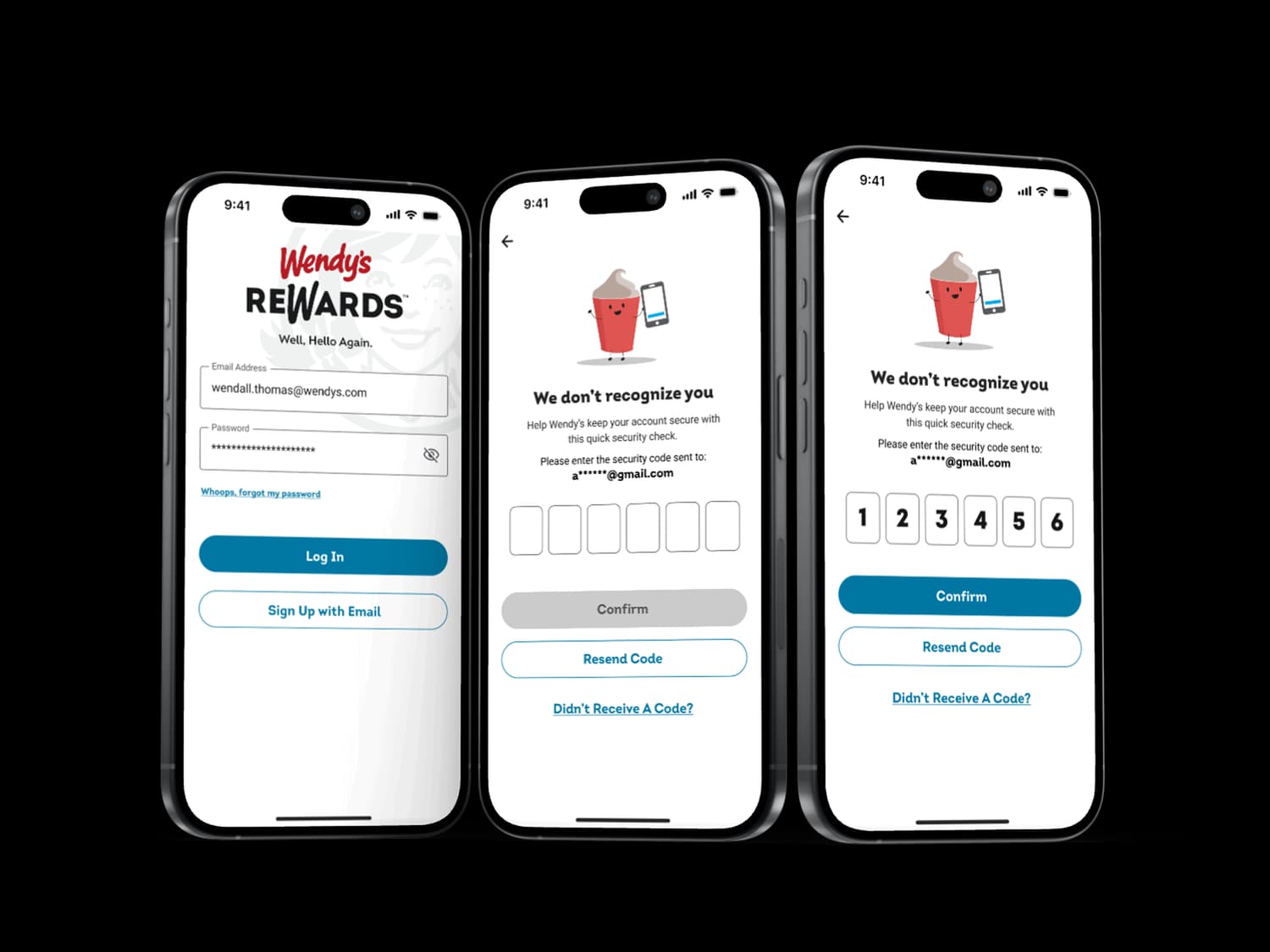
Five decisions before users could even see a menu. New user setup was a maze. Returning users had to re-confirm everything they'd already told us.
The solution
Defaulting logic built around recent preferences. Streamlined new user setup. Location intelligence that worked in the background, not in the way.
–5 taps before ordering even beganThe problem
Combo building required separate screens for every modification. Each customization felt like its own journey. The path from browsing to bag was never clear.
The solution
Consolidated customization into a single scrollable interaction. Smarter defaults surfaced the most common modifications first. A shorter, cleaner path straight to bag.
Dramatic reduction in interactions per itemThe problem
The bag screen tried to do everything at once — order review, payment, pickup options, upsells, loyalty rewards. The result was a wall of decisions that caused errors and abandonment.
The solution
Split into two purpose-built screens: order verification first, payment and logistics second. Each screen had one job. Users moved faster and made fewer mistakes.
Fewer errors, faster completionThe Number
That's the headline. But the number only happened because every other thing fell into place first — the research, the trust, the engineering relationships, the stakeholder work. The design was almost the easy part.
70% reduction is the headline. The real work was creating the conditions that made those changes possible.
The improvements were visible enough that users wrote about them. App Store reviews specifically called out the faster ordering experience — unprompted feedback that confirmed the reduction wasn't just measurable, it was felt.
The Director of Product, initially one of the harder relationships to navigate, became a genuine design advocate by the end of the engagement. That trust outlasted the project — and opened doors that design output alone never would have.
The Real Work
A significant portion of early research feedback insisted the app was fine. "Loyalists" — users who had adapted to every inefficiency — confused familiarity with quality. The key stakeholder on the original build fell into this camp too.
The solution wasn't better designs. It was better evidence. User data became the only currency that mattered.
Outcomes
70%
Reduction in
order interactions
<10
Taps to place
a complete order
–5
Pre-menu taps
eliminated
Reflection
This project reinforced something I've come to believe strongly: the hardest problems in product design aren't design problems. They're people problems.
70% is the headline. But the real work was building the trust, navigating the resistance, and creating the conditions that made those changes possible in the first place.